
IFSO surgeon · JCI hospital · İzmir, Turkey
Gastric Bypass Turkey: who it suits better than a sleeve
Not every patient needs gastric bypass surgery in turkey — and not everyone is well served by a sleeve. What you will find here is the basis for a decision, not a sales page.
Send your height, weight, age and any existing conditions. You will get an honest assessment — including when gastric bypass turkey is not the right procedure for you.

What is a gastric bypass — and what makes it different?
A gastric bypass turkey works through two mechanisms at once. That is exactly what sets it apart from every other bariatric procedure.
First the stomach is surgically reduced so that only a small part is used for food — that is restriction. In addition, part of the small bowel is bypassed, so a share of the calories is never absorbed at all — that is malabsorption.
After gastric bypass surgery in turkey patients feel full sooner and automatically eat less. The bypassed stretch of bowel strengthens the effect and also changes the hormonal signalling of the gut — the reason a gastric bypass in turkey acts more strongly on type 2 diabetes than a gastric sleeve.
That second component is why a gastric bypass delivers more weight loss — and why it demands more discipline with supplements at the same time. The two belong together, and we discuss them before the operation, not after.
Gastric bypass or gastric sleeve: which procedure suits you?
There is no procedure that is better for everyone. There is only the one that fits your starting position better. In clinic, these four questions almost always settle it.
The differences side by side
| Criterion | Gastric bypass | Gastric sleeve |
|---|---|---|
| How it works | Stomach reduced + small bowel bypassed | Only the stomach is reduced |
| Weight loss | 60–80% of excess weight | 50–70% of excess weight |
| Typ-2-Diabetes | remission up to 80% | remission up to 60% |
| Reflux | usually improves | can worsen |
| Operating time | 90–120 minutes | 45–60 minutes |
| Hospital stay | 4 nights | 4 nights |
| Supplements | lifelong, non-negotiable | lifelong, but lighter |
| Reversible | technically possible, rarely done | no |
"Sleeve first, bypass later" — is that possible?
Yes, and it is an established route. If weight returns after a sleeve, or severe reflux develops, the sleeve can be converted into a bypass. It is one of the most common procedures in our gastric revision surgery.
The reverse does not apply: a bypass cannot simply be turned back into a sleeve. That is why the first decision carries more weight with a bypass.
Whether a gastric bypass in turkey makes sense in your case is decided after bloods, gastroscopy and a conversation — not by price, and not by what someone you know had.
Who a gastric bypass suits — and how the procedure runs
Your days in İzmir
- 1VIP transfer from the airport. You are collected and taken straight to the hospital.
- 2Work-up on arrival day. Bloods, ECG, abdominal and cardiac ultrasound, gastroscopy.
- 3Clearances. Cardiology, respiratory medicine and anaesthesia. Without all three we do not operate.
- 4The operation. 90 to 120 minutes, laparoscopic, by Dr. Arayıcı personally.
- 5Mobilisation from the second hour. Getting up early lowers the risk of thrombosis.
- 6Discharge and flight home after the gastric bypass operation in turkey. In total that means five to seven days in the country, followed by twelve months of aftercare in English.
Advantages and risks — both belong here
- 60–80% of excess weight in twelve to eighteen months
- Type 2 diabetes: remission in up to 80% of patients
- Reflux, high blood pressure, sleep apnoea often improve markedly
- Joints and back are noticeably relieved
- Stable long term — one of the best-studied bariatric procedures
- Nutrient deficiencies: iron, calcium, vitamin B12 and D must be supplemented for life
- Dumping syndrome: nausea, cramps, diarrhoea after sugary or fatty food
- Surgical risks: infection, bleeding, thrombosis — as with any abdominal operation
- Gallstones from the rapid weight loss
- A lifelong change. The operation is a tool, not an automatic result
If anyone plays down the risks to you, that is a warning sign. We have written out all the disadvantages of weight loss surgery openly — including the uncomfortable ones.
Is a gastric bypass in Turkey safe?
The honest answer: a gastric bypass in turkey is abdominal surgery, and abdominal surgery is never risk-free. What can differ is how the risk is handled — and with a bypass there are two points a sleeve does not have.
A bypass creates two new connections — that is where the main risk of the first days sits. So we test the seal during the operation, not afterwards. We have not seen a leak by this route in years; drains and a post-operative methylene blue test have not been part of our routine for five years.
Because the small bowel is rerouted, gaps are created through which loops can later become trapped. This is a long-term risk a sleeve does not carry. We close those gaps during surgery. Sudden cramping abdominal pain months or years later still belongs in the differential — you and your GP should know that.
Before every gastric bypass operation in turkey there are bloods and abdominal and cardiac ultrasound. Then you see cardiology, respiratory medicine and anaesthesia. If one of the three clearances is missing, we do not operate — not even when you have travelled and the date is set. It is the most uncomfortable part of our process and at the same time the most important.
Complications mostly show in the first days. You are in our hospital for exactly that window, with intensive care in the building — not in a hotel room. That is not a comfort question but the difference between "treated immediately" and "has to be brought back first".
How high the complication rate actually is, what happens in an emergency and how to recognise a safe clinic is answered in full on a page of its own: how safe gastric surgery in Turkey is.
Gastric bypass and type 2 diabetes
For some of our patients the blood sugar, not the scales, is the real reason for surgery. With a bypass that is medically coherent — and worth understanding.
The effect starts before the weight loss
With a sleeve, diabetes improves mainly because weight falls. With a bypass a second mechanism is added: because food skips the duodenum and the upper small bowel, the release of the gut hormones that govern insulin changes. That is why we see better blood sugar readings in many patients within the first days after surgery — long before meaningful weight has been lost.
What remission does not mean
Remission means normal blood sugar without diabetes medication. It does not mean cure. Diabetes can return after years, particularly if weight is regained. And the outlook depends heavily on how long you have had diabetes and whether you already use insulin — the shorter the duration, the higher the chance of remission. Someone on insulin for fifteen years is in a different position from someone diagnosed the year before last.
We therefore promise no one that they will come off their medication. We say what is likely, and your management stays in the hands of your diabetes team — after surgery as well.
If you are already on Ozempic or Mounjaro
GLP-1 drugs change the starting position before an operation and must be paused in good time before anaesthesia. How we handle patients coming off these agents is on our page about bariatric surgery after GLP-1 and Ozempic.
Which other bariatric procedures we offer in İzmir, and how they differ in practice for patients travelling from abroad, is set out in our overview of bariatric surgery in Izmir.
Gastric bypass in Turkey after 5 and after 10 years
Most pages about gastric bypass in turkey stop at month twelve. The decision you are making reaches considerably further — which is why what comes afterwards is set out here.
What is realistic after ten years
The long-term data on bariatric surgery are among the best in visceral surgery. The SOS study, the longest controlled investigation in the field, shows significantly lower long-term mortality in operated patients — mainly through fewer deaths from cardiovascular disease and diabetes.
What that does not mean: that every kilo stays off. Some patients regain weight after years, even after a bypass — and that is treatable, not final. How we handle it is on our page about weight regain after weight loss surgery.
The one point that decides ten years
Supplementation after a gastric bypass is not optional. Because part of the small bowel is bypassed, iron, vitamin B12, calcium and vitamin D are absorbed less well for good. Stopping them is not felt immediately — it shows years later, as anaemia, bone density and exhaustion.
So an annual blood count is part of the operation, for life. That is the price of the stronger effect, and we say it beforehand.
What a gastric bypass turkey costs
The gastric bypass turkey cost applies from your landing in İzmir and covers the operation, the work-up, four nights in hospital, medication and twelve months of aftercare. Your flight is not included — you book that yourself, which is almost always cheaper and keeps your dates in your hands.
For comparison: privately in the UK, a gastric bypass runs from roughly £10,000 to £15,000.
Exactly which services are included, what comes on top and how the other procedures compare is set out in full on our page about gastric bypass turkey cost.
Why patients from the UK travel abroad for a gastric bypass turkey
It is rarely only about the price. In the conversations we have, it is almost always the same three reasons — and the first has nothing to do with money.
On the NHS, funding requires a documented pathway first: tier 3 weight management, dietetic and psychological assessment, then referral and a panel decision. Waits of eighteen months to several years are common, and the criteria vary by region. With us, weeks usually pass between the first message and the operation date.
Those who will not wait, or do not meet the criteria, pay privately — and in the UK a gastric bypass runs £10,000 to £15,000. The difference against the fixed price for a gastric bypass in turkey is the actual reason travelling comes up at all. Exactly what is included is set out under costs above.
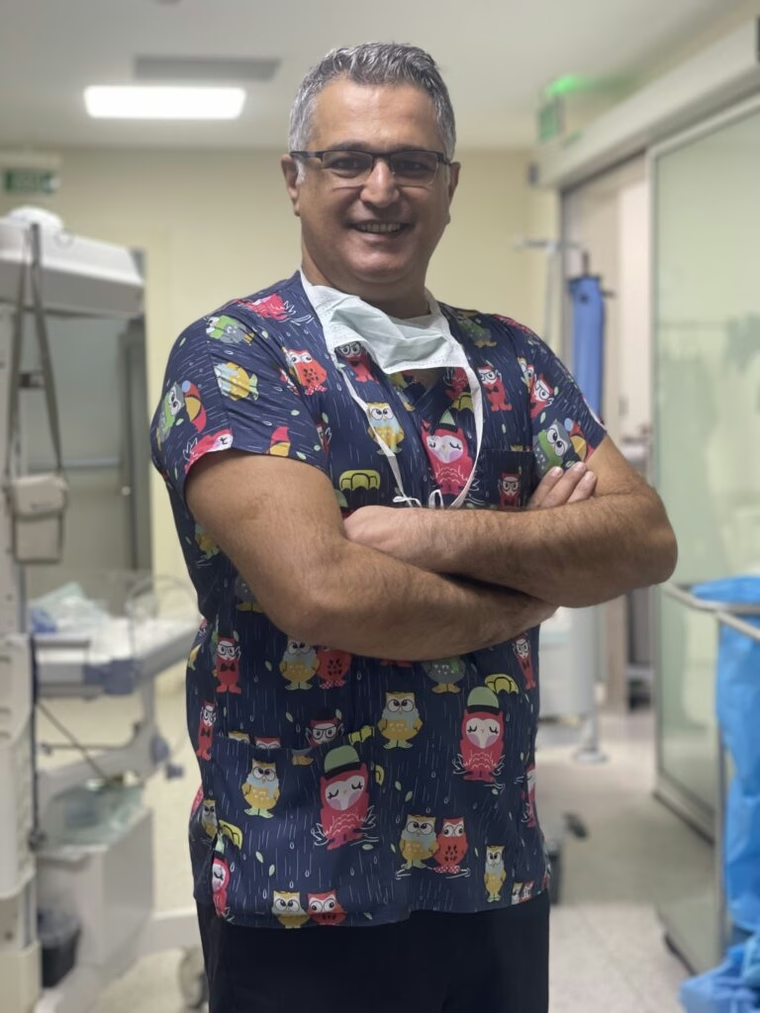
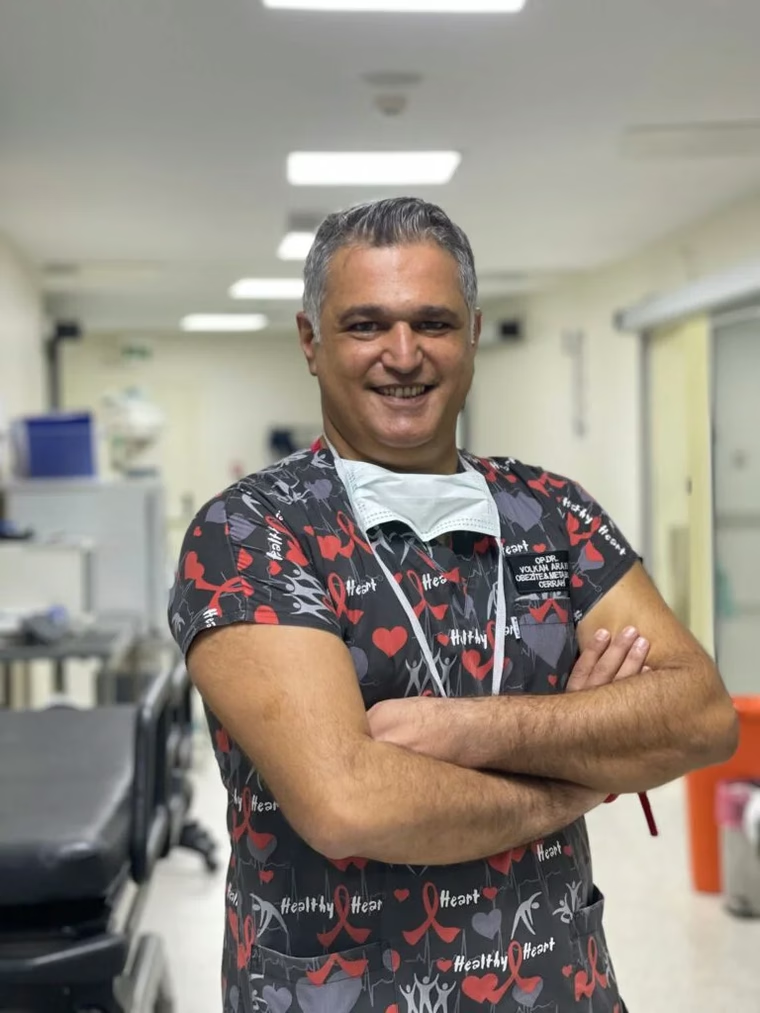
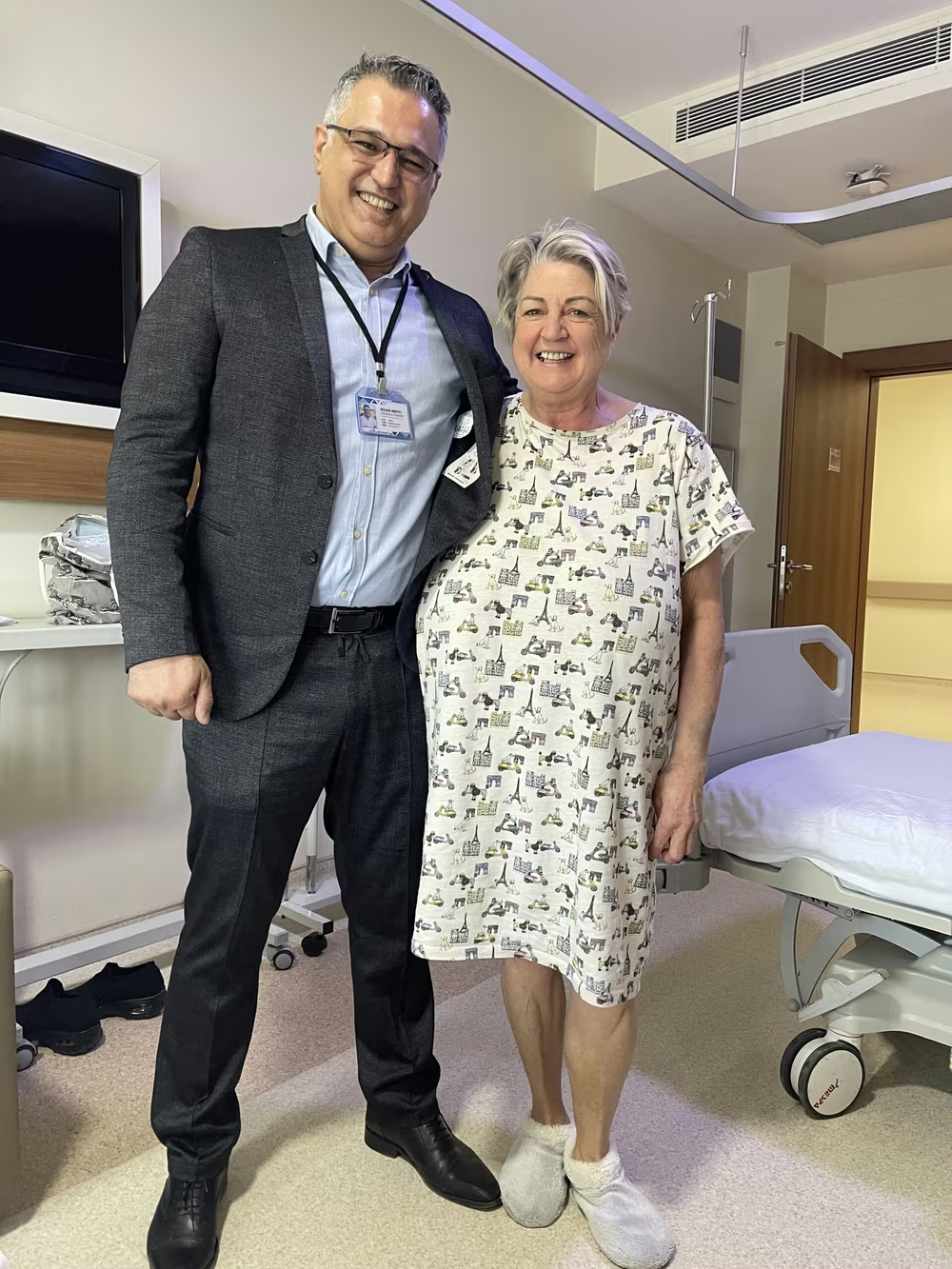
Gastric bypass surgery in turkey rewards routine. Op. Dr. Volkan Arayıcı has performed more than 5,000 bariatric operations and operates on every patient himself. That is a volume few centres reach — and the reason many patients come despite the distance.
What argues against it — that belongs here too
After you return you are a long way from your surgeon. We address that with twelve months of aftercare by video call and WhatsApp, and I am personally reachable. But it remains a difference from a clinic in your own city, and anyone who cannot live with that comfortably should have the operation at home. We say that sentence to patients on the phone as well.
Why is a gastric bypass in Turkey cheaper than in the UK?
It is the first question almost every British patient asks, and it deserves a straight answer rather than a marketing one. A gastric bypass turkey package costs less for reasons that have nothing to do with the operation itself — and there are also reasons that should worry you. Both are below. The figures themselves are under costs further up this page.
The four honest reasons
A theatre nurse, an anaesthetist and a hospital bed simply cost a fraction of what they cost in Britain. This is the single largest part of the difference, and it changes nothing about how the operation is performed.
Turkey performs bariatric surgery at a scale no UK private hospital reaches. More than 5,000 operations sit behind this practice. High volume lowers the cost per case — and, more importantly, it is the strongest predictor of a low complication rate in bariatric surgery.
Most of what a British patient finds on Google is not a clinic. It is a booking platform that takes a commission and passes you to whichever hospital has a free slot. You pay that commission. Here you deal with the surgeon's own practice.
Sterling buys considerably more in Turkey than it did five years ago. That is currency movement, not a discount on your surgery, and it can move back.
The reason that should worry you
Some of the cheapest quotes are cheap because of what is missing
A package that undercuts everyone else usually does it in one of three ways: the patient is moved to a hotel the day after surgery instead of staying on a ward; the surgeon is whoever is on the rota that week rather than a named one; or aftercare ends the moment the flight home takes off. We do none of the three. You stay four nights in hospital, Op. Dr. Volkan Arayıcı operates on you himself, and aftercare runs for twelve months by video call and WhatsApp. That is why we are not the cheapest quote you will find — and we would rather explain the difference than cut those three things out of it.
What the lower price does not mean
The bypass is performed laparoscopically through four small incisions with the same staplers and the same energy devices used in any European centre. There is no cheaper version of this operation, and we do not offer one.
Specialist training in general and visceral surgery, IFSO membership and more than 5,000 bariatric operations are facts you can check. What a surgeon earns in İzmir has nothing to do with how many bypasses he has performed.
JCI and TEMOS are international standards assessed by external bodies, not self-awarded badges. The hospital has its own intensive care unit in the same building — which is the part that matters at three in the morning.
If a bypass is more than you need, the gastric balloon Turkey cost starts far lower and involves no surgery at all, and the mini gastric bypass in Turkey is a shorter operation for some patients. And if the NHS route is genuinely open to you and you are willing to wait for it, take it — it is the safest option available to a British patient, and we say so on the phone as well.
Gastric bypass turkey reviews: what patients write about İzmir
All the quotes below come verbatim from our public Trustpilot profile (160 reviews, average 4.9). We reproduce them unchanged and do not claim that each of these people had a bypass — as with any other procedure, what is reviewed is the clinic, the process and the care, and that is exactly what decides where you go.
"The main part I really appreciated was the tests they did before my operation. I've had many operations since I was a kid and the tests before this op was a lot more than any other operation I've had in the uk."
"Fantastic communication beforehand with his Team via WhatsApp! Nice WhatsApp group for previous and current clients to exchange experiences and questions. […] Very re-assuring for this high anxiety lady."
"17 months post op and I've lost 9st."
Why we quote them this way. Many clinic pages carry testimonials with a first name, an age and a weight that cannot be checked anywhere. Ours are public on Trustpilot, with dates and profiles — you can read every one yourself: see all 160 reviews on Trustpilot. More accounts, including other procedures, are collected under gastric surgery Turkey experiences.
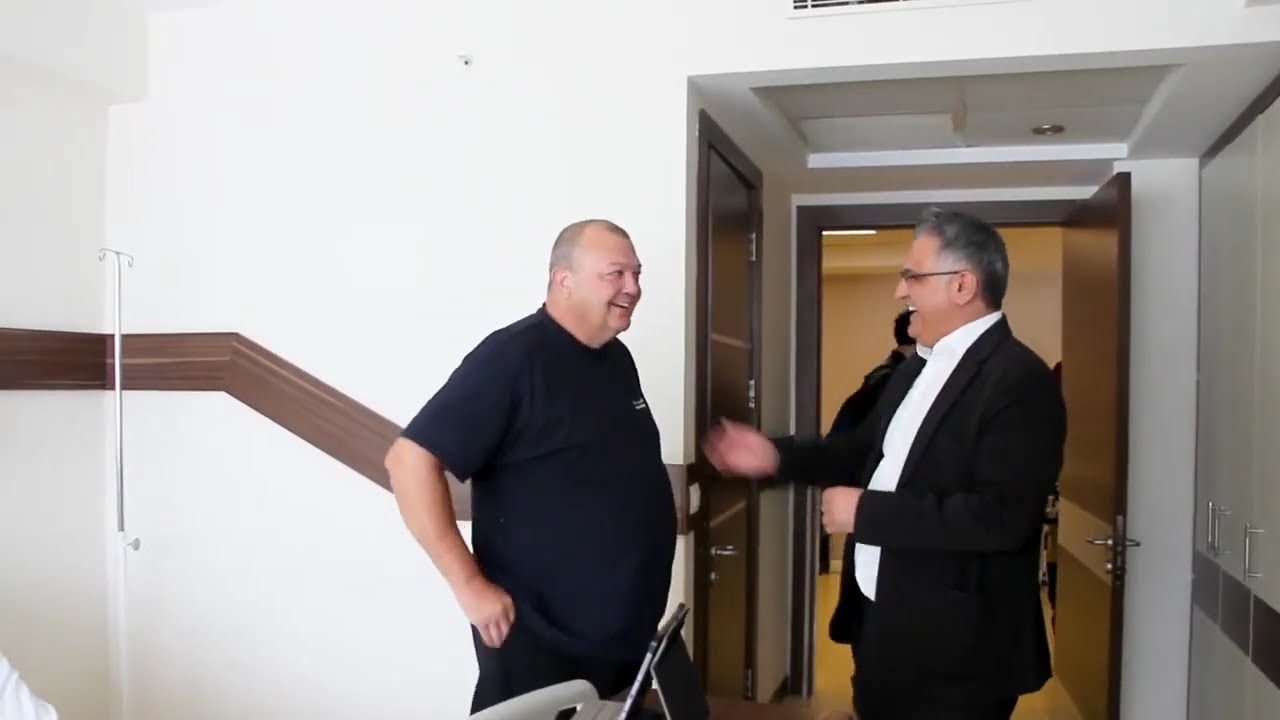
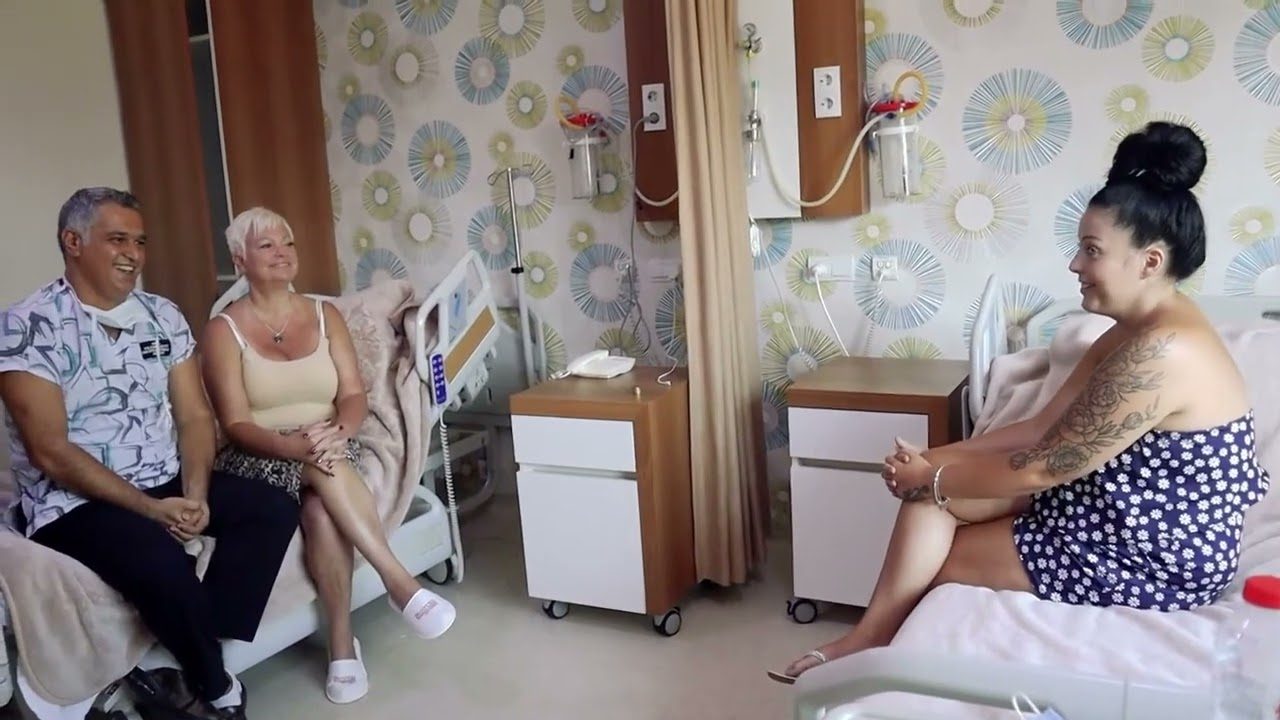
Gastric Bypass Turkey experiences İzmir: patients on video
Three recordings from the clinic in İzmir, all in English. The patients speak for themselves — no script, no cutting down to single sentences. The videos load only when you click on them.
 1:40
 2:08
 3:54
Privacy notice: the videos load only when you click the preview image. Clicking transfers data to YouTube and YouTube's privacy policy applies. No connection to YouTube is made before that.
Gastric Bypass Turkey before after photos
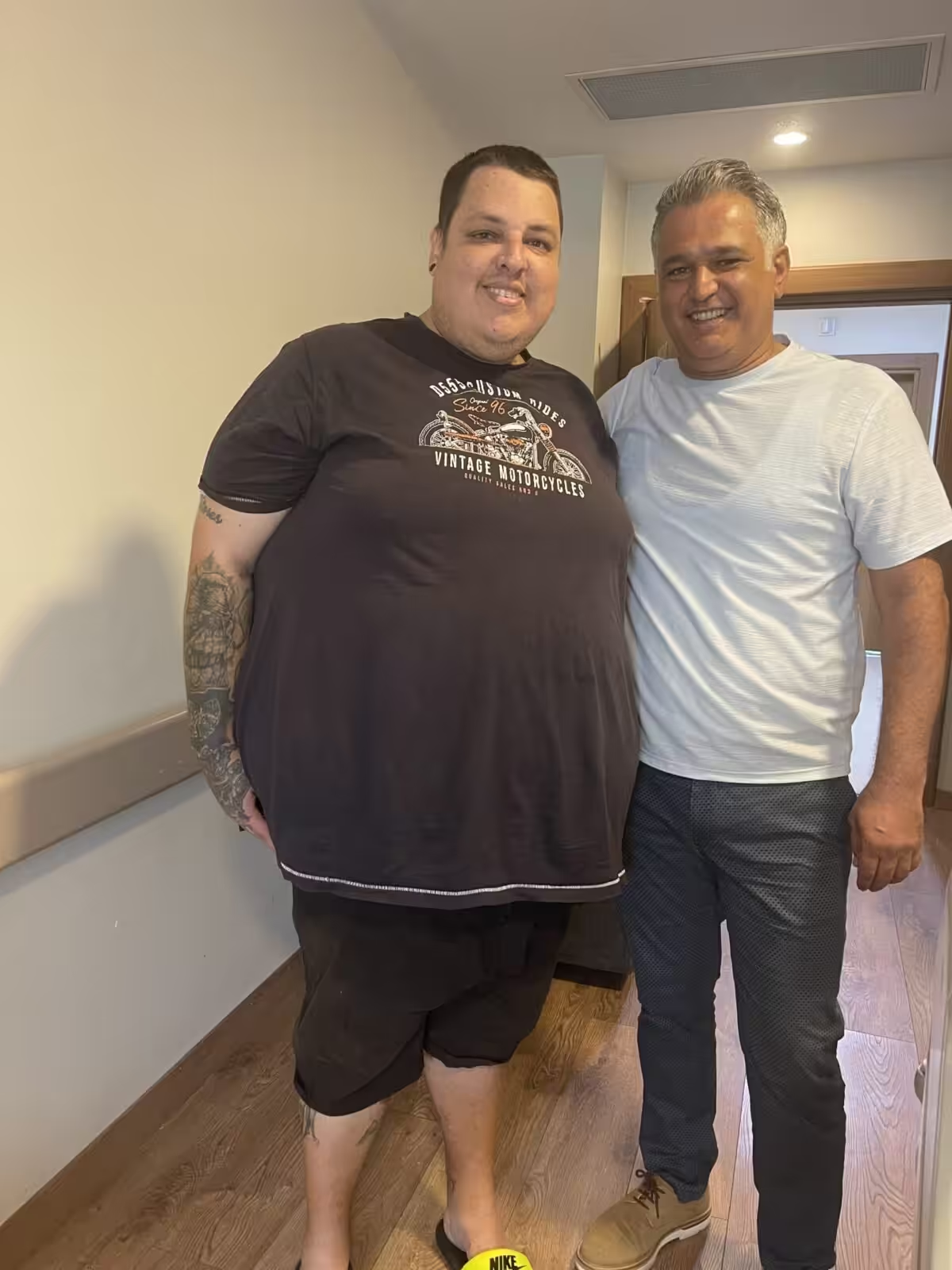
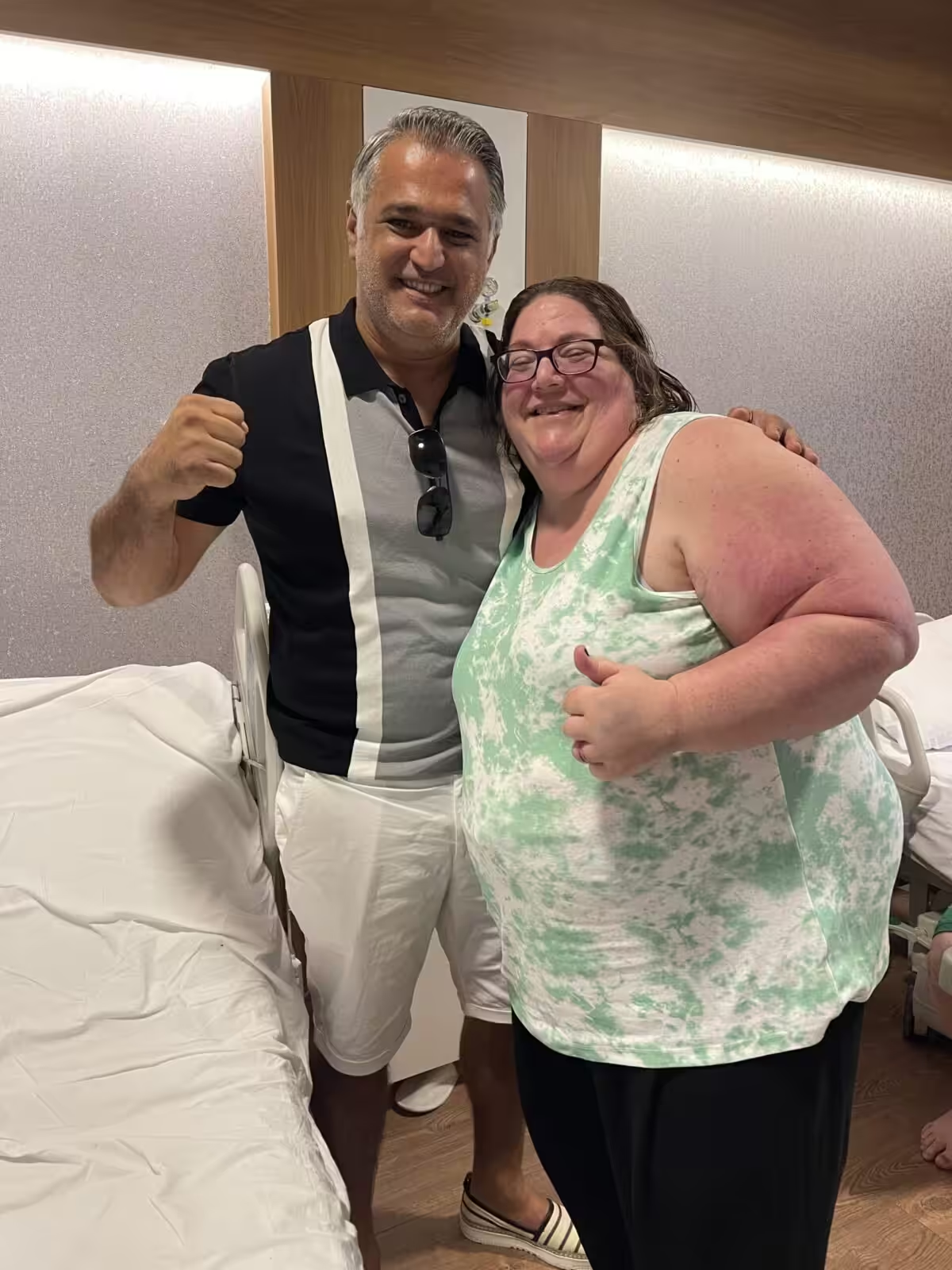
All images are from patients who came to İzmir for a gastric bypass turkey and consented to publication. We show them without names and without ages.
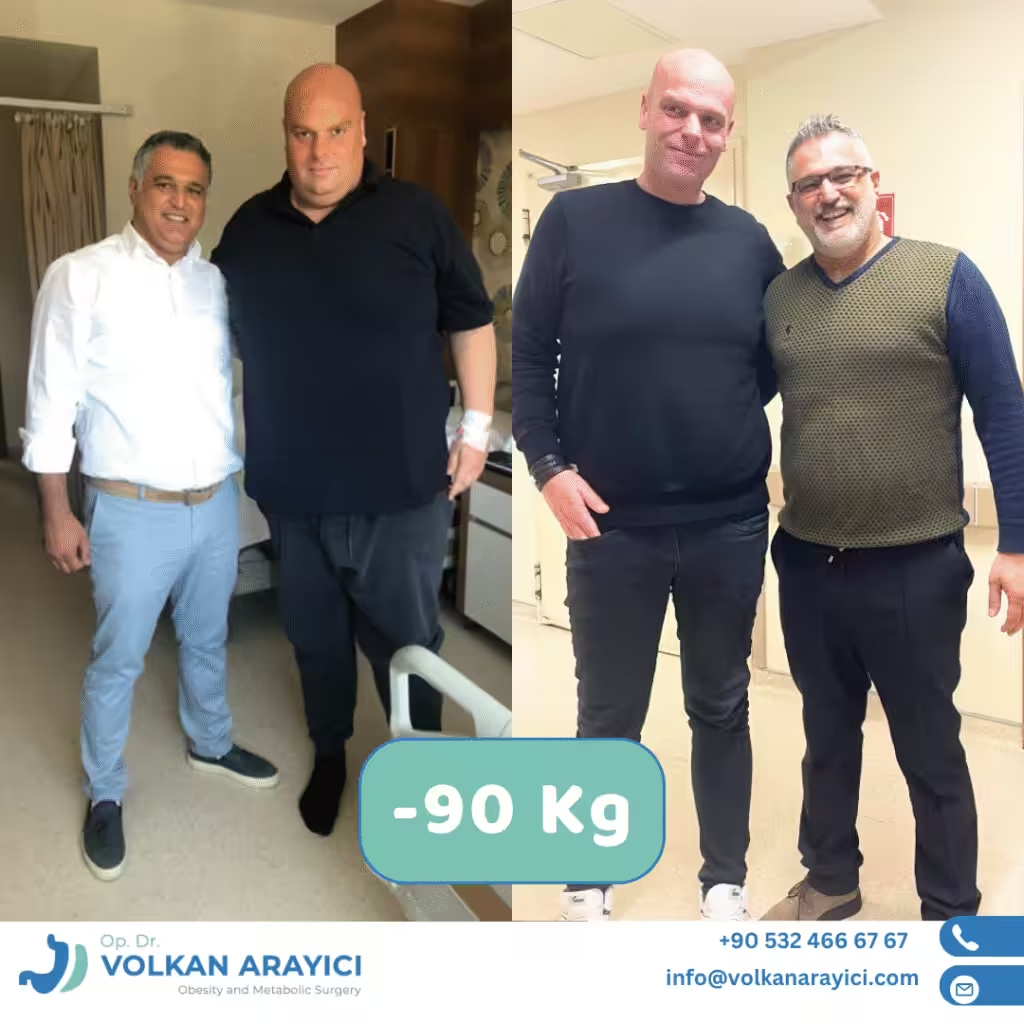
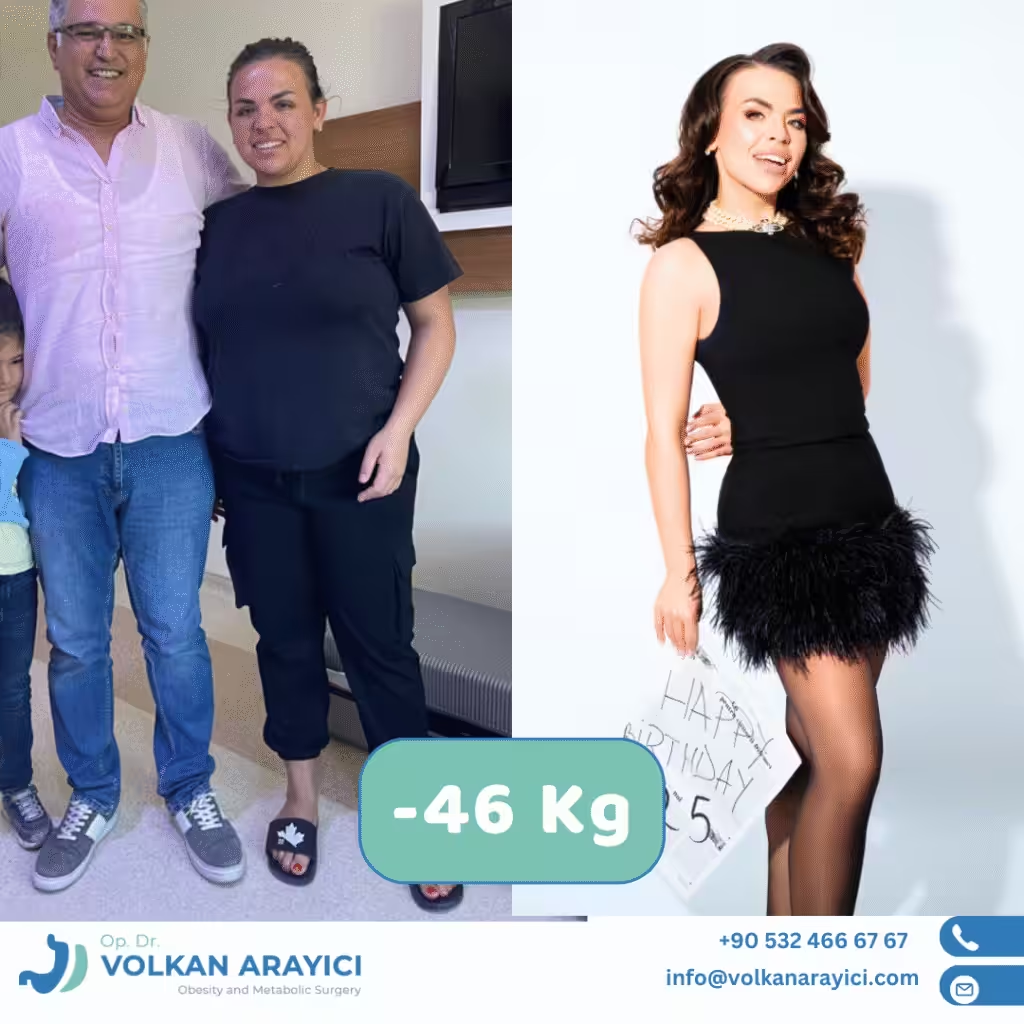
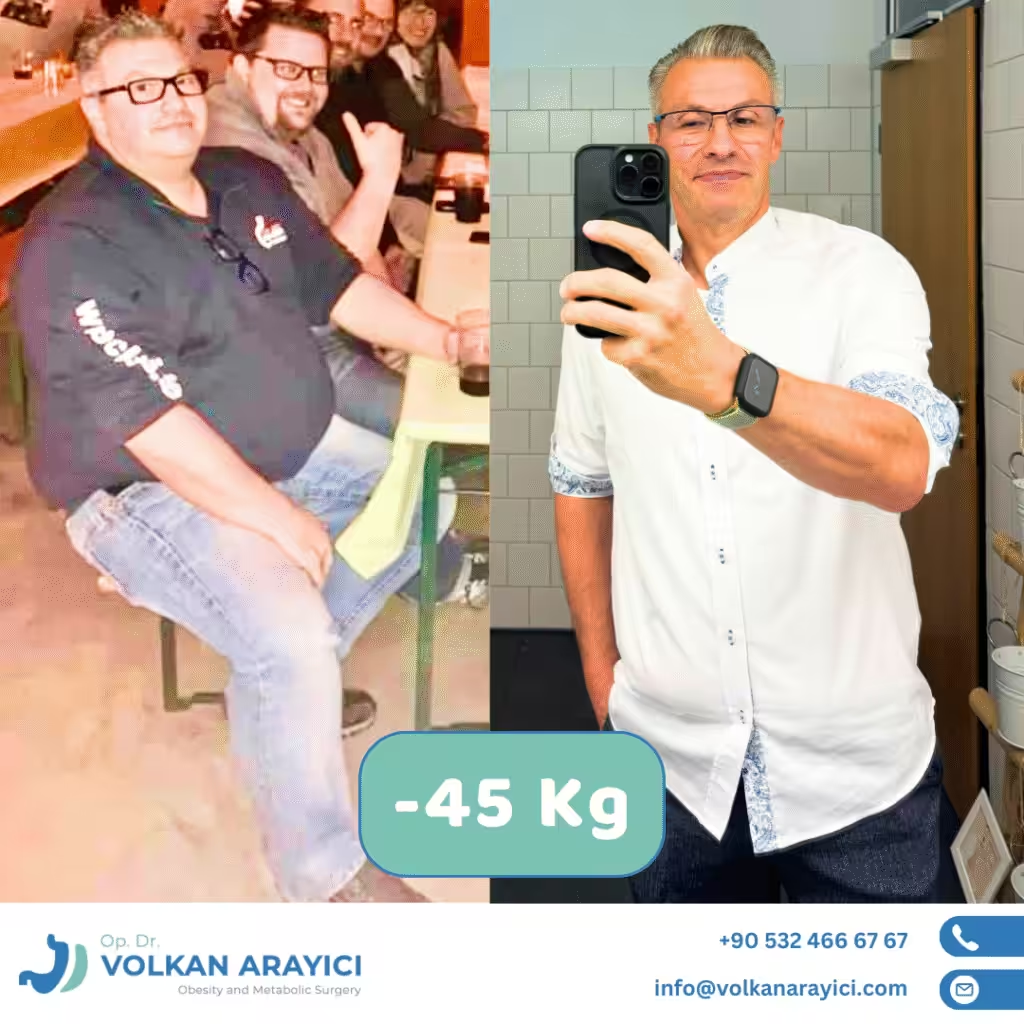
Results are individual. How much weight someone loses depends on starting weight, comorbidities, activity and engagement with the twelve months of aftercare. These images are examples, not a promise.
See the gallery with all before and after imagesSuccess stories after gastric bypass surgery
Three further courses from patients operated on in İzmir who consented to publication of their images. Again without names and without ages.


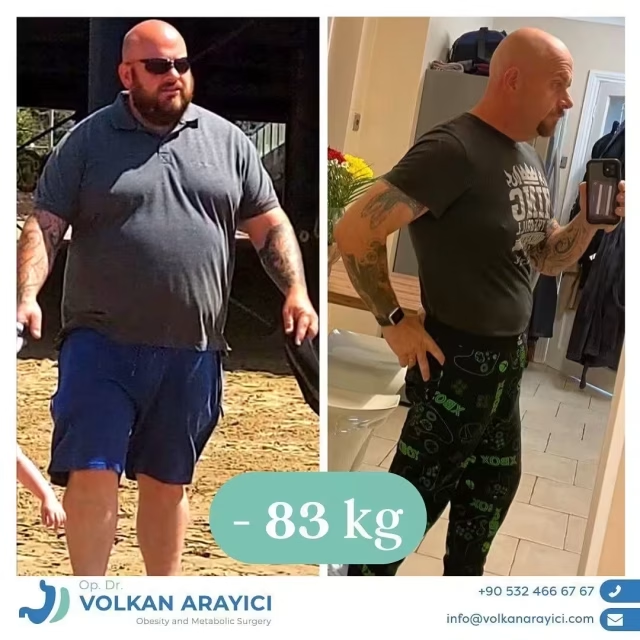
These courses are examples and not a promise. How much someone loses depends on starting weight, comorbidities and engagement with aftercare — exactly as with any other bariatric procedure.
Who is the best bariatric surgeon in Turkey — and how would you know?
Every clinic website in this market claims the answer is its own surgeon, ours included, so the claim is worth nothing. What is worth something is knowing which five facts actually separate a good bariatric surgeon from a risky one. Ask them of us and of everyone else you are considering for your gastric bypass turkey.
In bariatric surgery the link between how many procedures a surgeon performs and how few complications they have is one of the better-established findings in the field. A general surgeon who does forty bypasses a year alongside gallbladders is not the same as one who does this all day. Here: more than 5,000 bariatric operations.
On a platform booking you are assigned a hospital, and the hospital assigns a surgeon. You may not learn the name until the morning of surgery. Here: Op. Dr. Volkan Arayıcı performs every operation personally. There is no rotating team.
The IFSO is the international federation for obesity surgery. Membership is not a guarantee of anything on its own, but it is a verifiable fact rather than a slogan, and you can look it up. Here: IFSO member.
A surgeon is only as safe as the theatre around him. Ask for the hospital's name, not just the city, and check whether it has an intensive care unit on the same site. Here: Özel Medifema Hastanesi in Torbalı, JCI- and TEMOS-accredited, with its own ICU.
This is where most of the horror stories start — not in theatre, but six weeks later with nobody answering. Ask who you contact at week six, and get the answer in writing. Here: twelve months of aftercare by video call and WhatsApp, with the surgeon.
None of that makes anyone "the best". It makes the risk assessable, which is the only thing you can actually act on. If you want the numbers behind the risk rather than the credentials, we publish them: the gastric sleeve death rate in Turkey and the gastric sleeve leak symptoms to watch for are both set out in full, including the parts that are not flattering.
Gastric bypass turkey: who operates — and where
The point where the offers differ
With many providers a low price comes from moving patients to a hotel a day after surgery. That is exactly the window in which complications appear — and a hotel has neither an intensive care unit nor a surgeon. We move no one to a hotel. It costs more, and we stand by it.
If you are still comparing
Before you choose a provider, look soberly at accreditation, the surgeon, case numbers and where you will spend the first nights. Which criteria we think are worth applying — and how to check them — is set out under best clinic for gastric bypass turkey.
Not sure yet whether a bypass or a sleeve suits you?
Send me your weight, your height, your age and any existing conditions. I will look at it personally and tell you honestly which procedure I consider right in your case — including when the answer is that surgery is not the right step right now.
Ask for a free assessment on WhatsAppBefore you book: five questions to ask any clinic
Print this, or paste it into the chat window of every provider you are talking to. The questions are deliberately awkward. What matters is not only the answer but how quickly it arrives — and whether it arrives in writing. Compare our replies to a gastric bypass turkey enquiry against everybody else's.
“Are you the clinic, or are you booking me into one?”
A good answer names the hospital and the surgeon straight away.
A bad answer talks about “our network of partner hospitals” and asks for a deposit before naming one.
“Which surgeon will operate on me, and how many bypasses has he performed?”
A good answer gives one name and one number, and does not change either later.
A bad answer is “one of our expert surgeons” or a name confirmed only on arrival.
“Where do I sleep on the night after surgery?”
A good answer is a hospital ward, for several nights. Complications after a bypass appear in exactly that window, and a hotel has no ICU and no surgeon.
A bad answer is a five-star hotel presented as a luxury upgrade. It is a cost saving for them, not a benefit for you.
“What happens if something goes wrong after I fly home?”
A good answer names a person, a channel and a length of time, and puts it in the quote.
A bad answer is “you can always message us”, with no period stated.
“What is not in the price?”
A good answer is a list. Ours: flights are not included — the package begins when you land in İzmir. Everything from that point, including the four nights in hospital, is inside the fixed price quoted to you before you travel.
A bad answer is “everything is included”, followed by an invoice on the day for tests, medication or an extra night.
One more thing worth settling before you book, because it is rarely mentioned until afterwards: significant weight loss leaves loose skin, and whether you want anything done about it changes your planning. We set out what is realistic on the body contouring after weight loss surgery page. And if you are travelling for a revision rather than a first operation, the questions above matter more, not less — the gastric band revision in Turkey page explains why.
Ask us all five. Right now, on WhatsApp.
You will get the answers from the practice, in writing, before anyone mentions a deposit. There is no deposit — you pay on the day of surgery.
Message Op. Dr. Volkan Arayıcı on WhatsAppGastric bypass turkey FAQ
Which is better: a gastric bypass or a gastric sleeve?
Neither is better in principle — they suit different starting positions. The bypass is the clearer choice with existing reflux, with type 2 diabetes and at a very high BMI. The sleeve is the smaller procedure, leaves the small bowel untouched and needs less supplementation. We decide it together on your findings, not on a blanket rule.
Is a gastric bypass reversible?
Technically yes: because a bypass removes no stomach but only reroutes, the procedure can be undone in a further operation. In practice this happens rarely and only for serious medical reasons. A sleeve, by contrast, is final, because part of the stomach is removed.
How long does the operation take and how long will I be in hospital?
The laparoscopic operation takes about 90 to 120 minutes. You stay four nights in hospital, until discharge — with no transfer to a hotel. In total, allow five to seven days in the country for a gastric bypass turkey.
Will I need vitamins for life after a gastric bypass?
Yes. Because a section of the small bowel is bypassed, vitamin B12, iron, calcium and vitamin D are absorbed less well for good. Supplementation and an annual blood count are therefore a fixed part of the procedure.
How much weight do you lose after a gastric bypass?
In the first one to two years most patients lose 60 to 80 per cent of their excess weight. That is a range from experience, not a guarantee: starting weight, comorbidities, activity and engagement with aftercare shift the result in both directions. We promise no figure.
Does the bowel habit change after surgery?
Yes, changes in frequency, consistency and colour are common in the first months, because fat digestion changes. When that is normal and when you should get in touch is explained in detail under light coloured stool after gastric bypass.
Does personality or mood change after the procedure?
Many patients report mood swings, a changed relationship with their own body and shifts in relationships. This is a known part of the course and not a sign that something is going wrong. We have a separate page on personality changes after gastric bypass.
How long is the recovery and when can I work again?
Light everyday activity is usually possible after about two weeks; full recovery takes four to six weeks. When you return to work depends on how physical it is: desk work is generally feasible considerably earlier than heavy manual work. Please discuss exercise that loads the abdominal wall with us first.
Can I claim the cost against tax?
In the UK, private medical treatment is not generally deductible for an individual taxpayer, so plan on paying the full amount yourself. We issue a complete invoice and a medical report in English in every case; whether anything can be claimed in your particular circumstances is a question for your accountant — we give no tax advice.
Will the NHS or private insurance cover a gastric bypass turkey?
No. Neither the NHS nor private insurers reimburse elective bariatric surgery carried out abroad as a self-funded procedure. Funding at home is possible but requires a documented weight-management pathway first and commonly means waits of eighteen months to several years. That is precisely why many patients choose to self-fund abroad.
📚 Scientific References
All medical information is based on peer-reviewed studies and international clinical guidelines.
Angrisani L, et al. (2021). IFSO Worldwide Survey 2020. Obesity Surgery. DOI →
Schauer PR, et al. (2017). Bariatric Surgery versus Intensive Medical Therapy for Diabetes — 5-Year Outcomes. New England Journal of Medicine. DOI →
Sjöström L, et al. (2007). Effects of Bariatric Surgery on Mortality in Swedish Obese Subjects. New England Journal of Medicine. DOI →
Peterli R, et al. (2018). Effect of Laparoscopic Sleeve Gastrectomy vs Laparoscopic Roux-en-Y Gastric Bypass on Weight Loss. JAMA. DOI →
