IFSO Surgeon · Revision Bariatric Surgery · Izmir, Turkey

Weight Regain After Gastric Sleeve: Causes, and What Actually Works

If the scale has started moving the wrong way, you have not failed and the operation has not failed. Weight regain after a bariatric procedure is a documented biological pattern, not a character flaw — and in most cases the first answer is not another operation.

20–30%of patients regain meaningfully
2–5 yearswhen it usually starts
Medication firstsurgery is rarely step one
from €4,000revision, if it is needed

Send your height, current weight, your lowest weight after surgery and the year you were operated on. Dr. Arayıcı answers personally — including when the answer is that you do not need surgery.

Weight regain after gastric sleeve — Op. Dr. Volkan Arayıcı, revision bariatric surgeon in Izmir
Op. Dr. Volkan Arayıcı Bariatric & metabolic surgeon · IFSO member · since 2014

The four causes

Why weight regain happens after a gastric sleeve

A sleeve is a powerful tool against obesity. It is not a cure for it. Obesity is a chronic, relapsing disease, and four things change over the years — usually more than one at the same time. Knowing which of them applies to you is what decides the treatment.

  1. 1

    The stomach tube gradually widens

    The sleeve is a narrow tube made from what remains of your stomach. Over years it can stretch — slowly, and mostly through repeatedly eating past the point of fullness. You notice it as portions creeping back up: the meal that once defeated you no longer does. This is the one cause that medication cannot reverse.

  2. 2

    Eating patterns drift back

    The most common single reason, and the least dramatic. Grazing replaces meals. So-called slider foods — crisps, chocolate, biscuits, ice cream, anything soft and calorie-dense — pass through a small stomach without ever triggering fullness. Liquid calories do the same. None of this requires large portions to undo years of progress.

  3. 3

    Your metabolism adapts

    After substantial weight loss the body defends its old set point. Resting metabolic rate falls, and appetite hormones — ghrelin among them — partially recover. You are eating the same and burning less. This is physiology working against you, not a lack of discipline, and it is precisely where medication earns its place.

  4. 4

    Life, stress and the reasons behind the eating

    Surgery changes the stomach. It does not change bereavement, divorce, a difficult job or depression. Where eating was the coping mechanism before the operation, it tends to return as one afterwards — and no revision procedure addresses that. We would rather say this plainly than sell you a second operation that will not hold.

Notice the split: causes two, three and four are behavioural and hormonal — those respond to nutrition support and to medication. Only cause one is mechanical. That is why we investigate before we operate, and why revision surgery is the last option on the list rather than the first.

Setting the baseline

How much weight regain is normal — and when it stops being normal

Almost everyone regains something. The question that matters is how much, and from when. These are the figures we use when a patient asks whether they should be worried.

Year 1–2Lowest weightThe nadir. Most people reach it between 12 and 18 months.
Year 2–35–10% backExpected, physiological, not a warning sign.
Year 3–5Over 15%Worth investigating. This is when to get in touch, not later.
Any pointOver 25%Significant regain. Endoscopy is the sensible next step.

Those percentages refer to the weight you lost, not your total weight. If you went from 130 kg to 80 kg, you lost 50 kg — regaining 10% of that is 5 kg, not 13. Patients routinely frighten themselves by measuring the wrong number.

Weight regain after bariatric surgery is not rare and not a sign that anything went wrong: weight regain after weight loss surgery affects roughly 20 to 30 per cent of patients to a degree that needs active treatment, and it typically begins somewhere between the second and fifth year — after the honeymoon period, when appetite has partially returned and life has become ordinary again.

Signs your sleeve itself may have widened

  • You can comfortably finish a portion that would have been impossible two years ago
  • Fullness arrives late, or barely arrives at all
  • Hunger between meals has returned to something like its pre-surgery level
  • The regain is steady rather than tied to a stressful period in your life

None of these is proof on its own. A gastroscopy shows the actual size of the sleeve, and that is the difference between guessing and knowing. If your regain came with new reflux or persistent nausea after eating, mention it — it changes which operation would be appropriate.

Step one, not step two

Medication before surgery: where GLP-1 analogues fit

For most patients who come to us with weight regain after a bariatric procedure, the honest first recommendation is not a second operation. It is a GLP-1 analogue, combined with proper nutritional review. Only when that fails, or when the sleeve is measurably dilated, does revision surgery enter the conversation.

Why a glp-1 works on exactly the problem that returned

Glucagon-like peptide-1 analogues mimic a gut hormone your body already makes. They act on the appetite centres in the brain, slow gastric emptying so food stays with you longer, and improve insulin response. Read that list against the four causes above and the fit is obvious: they address the hormonal drift and the appetite return — the two things a knife cannot reach.

They are also reversible. If it does not suit you, you stop. A second operation is permanent, carries the risks of operating through scar tissue, and cannot be undone. Given a choice between the two, the reversible option goes first — that is not caution, it is sequence.

What they will not fix: a sleeve that has genuinely widened. If the mechanical restriction is gone, a medication that reduces appetite still leaves you able to eat large volumes the moment you stop taking it.

Before starting

  • A full medical review — history, current medication, thyroid and pancreatic considerations
  • Blood work, because deficiencies after bariatric surgery change the picture
  • A realistic conversation about side effects and about what happens when you stop
  • Prescribing and monitoring by a doctor who knows your operated anatomy

If you are considering surgery after a period on these medications rather than instead of it, that is a different pathway with its own preparation — we have written about bariatric surgery after Ozempic and other GLP-1 drugs separately.

If surgery is the answer

Revision options: gastric resleeve or conversion to bypass

When medication and nutritional work have been tried and the endoscopy shows a genuinely dilated sleeve, there are two sensible operations. Which one depends far less on how much weight came back than on whether you have reflux.

Option A

Gastric ReSleeve

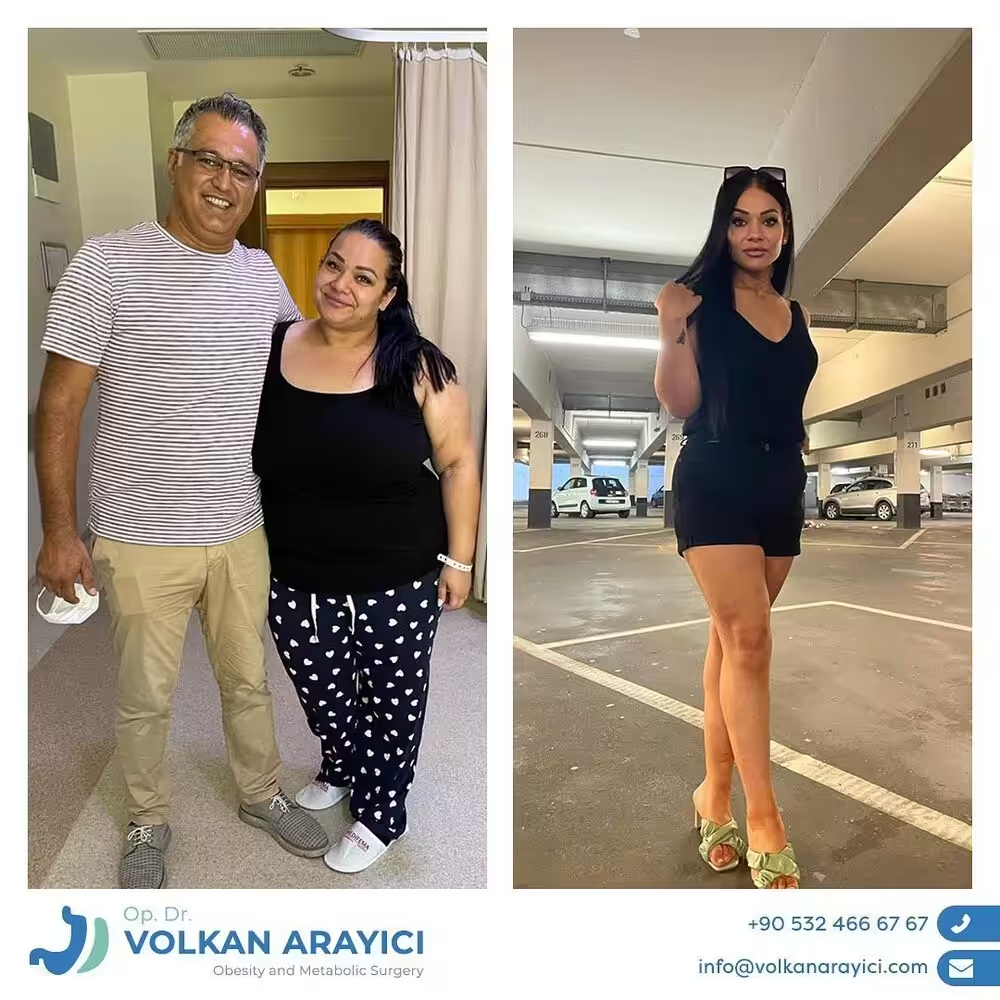
Weight regain after gastric sleeve — before and after a gastric resleeve in Izmir

A gastric resleeve re-narrows the stomach tube that has widened, restoring the restriction you had after the first operation. Laparoscopic, and technically the simpler of the two — although operating through the scar tissue of a previous procedure is never routine.

  • Best for: a measurably dilated sleeve, no significant reflux
  • Not for: regain that is behavioural, with a sleeve still the right size
  • From €4,000, all-inclusive, four days in hospital until discharge
Full detail on gastric resleeve →
Option B

Gastric Sleeve revision to Gastric Bypass
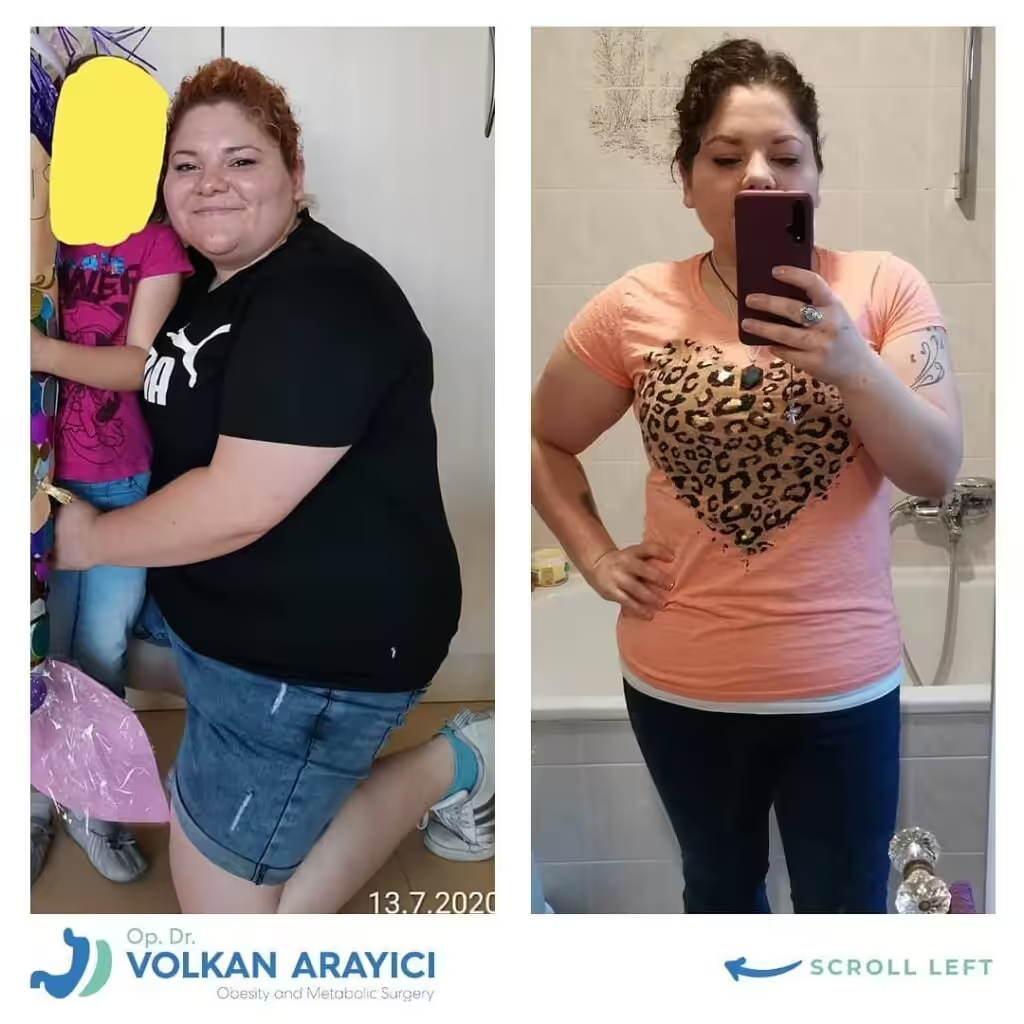
Before and after a gastric sleeve revision to gastric bypass for weight regain

Converting the sleeve to a bypass adds a malabsorptive component and, crucially, takes acid away from the oesophagus. Where a patient has developed reflux — common after a sleeve — this is usually the correct operation rather than re-narrowing a tube that is already causing symptoms.

All revision options and pricing →

There is a third route worth knowing about. Where a patient has reflux but does not want to be on medication long term, a mini gastric bypass is often the better conversion — a single anastomosis, shorter operating time, and the same effect on acid. It is a genuine option, not a compromise.

What we will not do: operate because you asked us to. If the endoscopy shows a sleeve that is still the right size, a second operation will not hold — the weight will return the same way it did the first time, and you will have paid for scar tissue. In that situation we say no, and we say why. The risks and downsides of sleeve surgery are worth reading before any second procedure.

Next step

What to do now

Weight regain after a bariatric procedure does not erase what you achieved. It is a chronic disease reasserting itself, and it has treatments — most of which are not surgical. What it does need is an honest assessment rather than another year of hoping it settles.

1Measure properlyYour lowest weight after surgery against today. Percentage of weight lost regained, not total weight.
2Get the endoscopyIt is the only thing that separates a widened sleeve from a behavioural pattern. Everything else is guesswork.
3Try the reversible option firstNutritional review and, where appropriate, a GLP-1 analogue under supervision.
4Consider revision only thenAnd only if the anatomy supports it. A second operation on a normal sleeve does not hold.

One thing patients ask before they ask anything else: is a second operation more dangerous than the first? It is technically harder, which is a different question — and the answer depends almost entirely on who is holding the instrument. Our figures and protocol are set out in full under how safe gastric sleeve surgery in Turkey really is.

Send your height, current weight, lowest weight after surgery, the year and type of your first operation, and any reflux symptoms. Message Dr. Arayıcı on WhatsApp — he replies personally, usually the same day, and will tell you if surgery is not the answer.

Is a revision surgery right for you?

Dr. Arayıcı reviews each case individually. Send us your surgery history and current weight — we'll get back to you within 24 hours.

💬 Ask About Revision Surgery

Frequently Asked Questions

Weight regain after gastric sleeve usually has more than one cause. The most common are a gradual return to higher-calorie eating and grazing habits, a natural stretching of the stomach pouch over the years, reduced physical activity, and hormonal adaptation as the body adjusts to its new weight. In most cases it is not a sign that the surgery "failed" — it reflects the long-term nature of obesity as a condition. Identifying the specific cause is the first step: depending on what we find, the solution may be a structured dietary plan, GLP-1 support, or a re-sleeve revision to restore restriction.

Some degree of weight regain after gastric sleeve is common, and it usually becomes noticeable from around the second year onwards, once the initial rapid weight-loss phase is over. For most patients this is a small, stable amount and nothing to worry about. A smaller group experiences more significant regain, most often when old eating habits gradually return or the stomach pouch stretches over time. The important message is that weight regain after gastric sleeve is manageable — with a review of your nutrition, and where appropriate GLP-1 medication or a re-sleeve (revision) procedure, most patients can get back on track.

Revision surgery is generally more complex due to existing scar tissue from your previous operation. However, when performed by a highly experienced bariatric specialist like Dr. Volkan Arayici, the complication rates remain very low. Advanced laparoscopic techniques ensure the procedure is as safe and minimally invasive as possible.

Weight loss outcomes vary based on the specific type of revision surgery, your starting weight, and your adherence to post-operative guidelines. Generally, patients can expect to lose a significant portion of their excess body weight within the first six to twelve months following a Gastric ReSleeve or a conversion to a Gastric Bypass.

Coverage for revision bariatric surgery depends entirely on your specific health insurance provider and your geographical location. Many international patients choose to travel to Turkey for these procedures, as experts like Dr. Arayici offer world-class care and state-of-the-art medical facilities at highly accessible and transparent price points.

For some patients, medical management with GLP-1 analogs is highly effective and may prevent the need for additional surgery. However, if structural issues like significant stomach dilation are present, or if medications do not produce the desired metabolic effects, revision surgery is often the most reliable solution for lasting health improvements.

Weight regain five or more years after gastric sleeve surgery is more common than most patients expect — and it is not simply a matter of willpower. Over time, the stomach pouch gradually stretches, allowing larger portion sizes without the same restriction you felt in year one. Alongside this, your body adapts hormonally: ghrelin levels (the hunger hormone) partially recover, metabolism slows, and the early post-surgery satiety signals become less pronounced. Lifestyle drift — larger portions, reduced physical activity, increased refined carbohydrates — compounds these physiological changes. If you are experiencing significant weight regain after gastric sleeve, a revision procedure such as a Gastric ReSleeve or conversion to gastric bypass may restore long-term results. A specialist evaluation is the first step.

Several signs suggest your gastric sleeve may have dilated over time. The most telling indicator is a gradual return of your pre-surgery eating capacity — being able to comfortably finish a full meal, feeling hungry again shortly after eating, or no longer experiencing the tight restriction that defined your early post-operative months. You may also notice that the weight loss has plateaued despite adherence to your diet, or that you are regaining weight steadily. Unlike the first year after surgery, you may find yourself grazing frequently rather than eating three small meals. A formal evaluation — including an upper GI series or endoscopy — can confirm whether pouch dilation has occurred and whether a revision surgery is appropriate for your situation.

Yes — a second gastric sleeve procedure, known as a Gastric ReSleeve or Re-Sleeve Gastrectomy, is a recognised and effective option for patients who have experienced significant weight regain due to pouch stretching. During the procedure, the dilated sleeve is re-trimmed to restore the original restrictive capacity of the stomach. ReSleeve is technically more demanding than a primary sleeve because of scar tissue from the first operation, which is why surgeon experience is critical. Not every patient is a candidate: your anatomy, degree of dilation, and overall health are assessed beforehand. For patients whose sleeve cannot be revised, conversion to a gastric bypass is an alternative with strong long-term outcomes. Contact our clinic to discuss which revision option suits your case.

References
1. Sjöström L et al. (2012). Bariatric surgery and long-term cardiovascular events. JAMA. PMID: 22215166
2. Mechanick JI et al. (2020). Clinical practice guidelines for perioperative nutritional, metabolic management of bariatric surgery patients. Obesity. PMID: 32202076

VA

Op. Dr. Volkan Arayıcı

Specialist in Bariatric & Metabolic Surgery · Izmir, Turkey

✓ IFSO Member✓ 5,000+ Surgeries✓ Specialist since 2014

This article was written and medically reviewed by Op. Dr. Volkan Arayıcı. Dr. Arayıcı has been exclusively specialising in bariatric surgery since 2014 and has performed over 5,000 procedures at a JCI- and TEMOS-accredited hospital in Izmir.

✍ Published: March 13, 2026 · 🔄 Updated: August 23, 2026 · About the author →