
Patient guide · Bariatric surgery İzmir
Diarrhoea After Gastric Sleeve Surgery: Causes and Solutions
Diarrhoea after gastric sleeve surgery is one of the most common digestive changes in the first weeks of recovery — and one of the questions we answer most often on our follow-up calls. This guide explains why it happens, how long it normally lasts and exactly when it needs a doctor's attention.

The short answer
Is Diarrhoea After Gastric Sleeve Surgery Normal?
Yes — in the first two to six weeks, loose and frequent stools are a normal part of recovery, not a complication. Your stomach has changed size and shape, your diet is liquid or puréed, and your gut bacteria are adjusting to a completely new routine. In our follow-up of more than 5,000 bariatric patients, mild diarrhoea after gastric sleeve surgery in the early weeks is something we reassure patients about almost daily.
Whether you write it the British way, diarrhoea, or the American way, diarrhea — the symptom, the causes and the advice on this page are exactly the same. What matters is the pattern: diarrhoea that improves week by week is expected; diarrhoea that persists, worsens or comes with warning signs deserves a proper review, and we cover both situations below.
Rule of thumb: improving = normal adaptation. Persisting beyond six weeks, or accompanied by blood, fever or dehydration = contact your surgeon. You will find the full checklist in the "when to see a doctor" section.
The causes
Why Does Diarrhoea Happen After Gastric Sleeve Surgery?
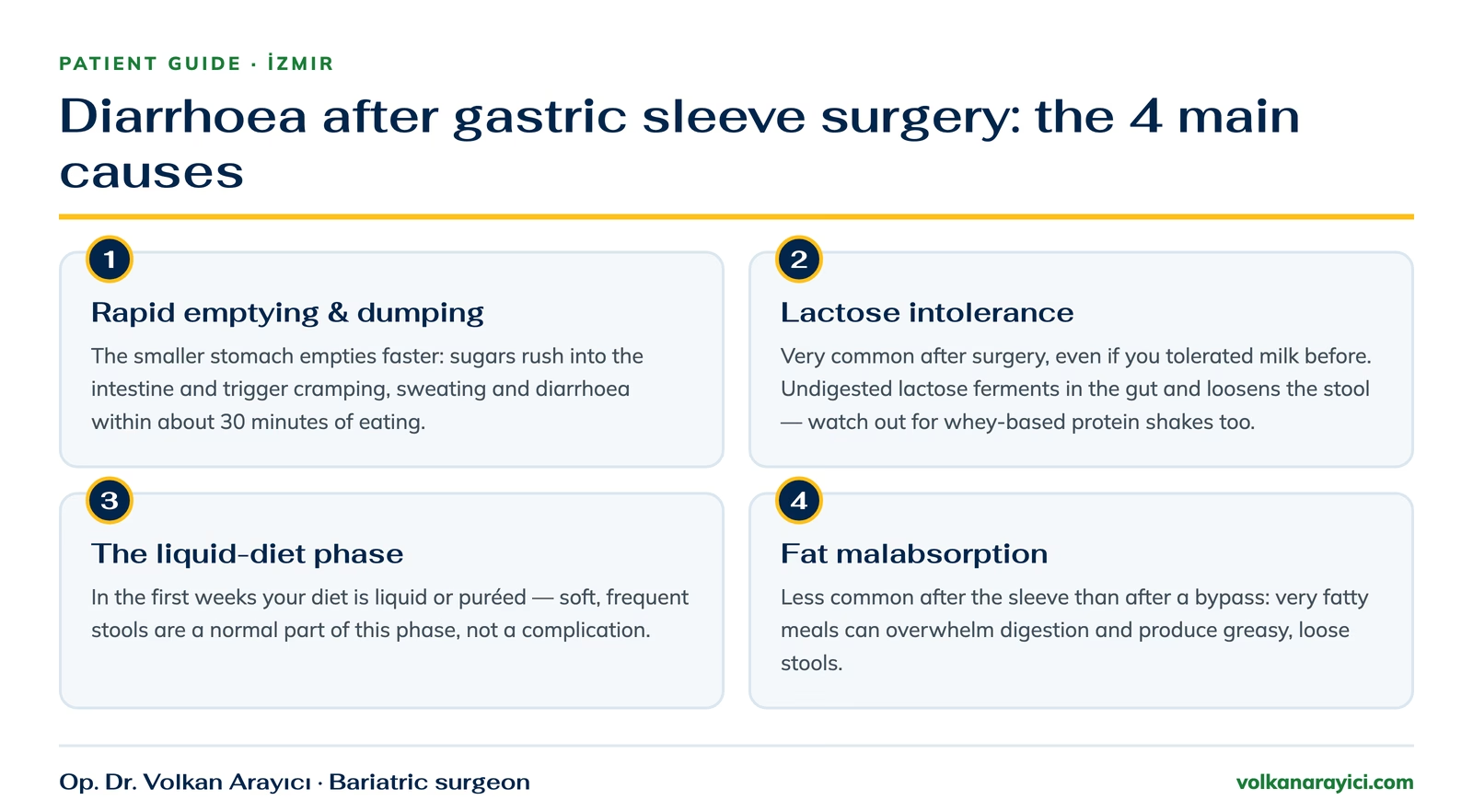
After a gastric sleeve surgery in Turkey or anywhere else, around 75–80% of the stomach is removed. That changes how quickly food reaches the intestine, which foods you tolerate and how your gut bacteria behave. Five mechanisms explain almost every case of diarrhoea after gastric sleeve surgery:
Rapid gastric emptying and dumping syndrome
The smaller stomach empties faster. When sugary or refined food rushes into the small intestine, it pulls in fluid and triggers cramping, sweating, a racing heart and diarrhoea — usually within 30 minutes of eating. This early dumping is the single most common trigger we see.
The liquid and purée diet phase
For the first weeks your entire intake is liquid or puréed. Soft, frequent stools during this phase simply mirror what goes in — they settle as solid food returns to the menu.
New lactose intolerance
Very common after sleeve gastrectomy, even in patients who always tolerated milk. Undigested lactose ferments in the gut and loosens the stool. Watch protein shakes too — many are whey-based and contain hidden lactose.
Fat malabsorption
Less common after the sleeve than after a bypass, but very fatty meals can overwhelm your changed digestion and produce greasy, foul-smelling, loose stools (steatorrhoea).
Disrupted gut bacteria, stress and infections
Antibiotics given around the operation, the stress of surgery and the change of diet all reshape your gut flora. Occasionally a genuine gut infection is the cause — an important check when diarrhoea refuses to settle.
The timeline
How Long Does Diarrhoea After Sleeve Gastrectomy Last?
For most patients, diarrhoea after gastric sleeve surgery follows a predictable curve. In weeks 1–2 it is at its most noticeable: a liquid diet plus a gut in full adaptation mode means soft stools several times a day. In weeks 3–6, as puréed and then soft solid food comes back, bowel movements settle step by step. By the second month, most patients have found a new, stable rhythm — often fewer bowel movements than before surgery, simply because much less food is eaten.
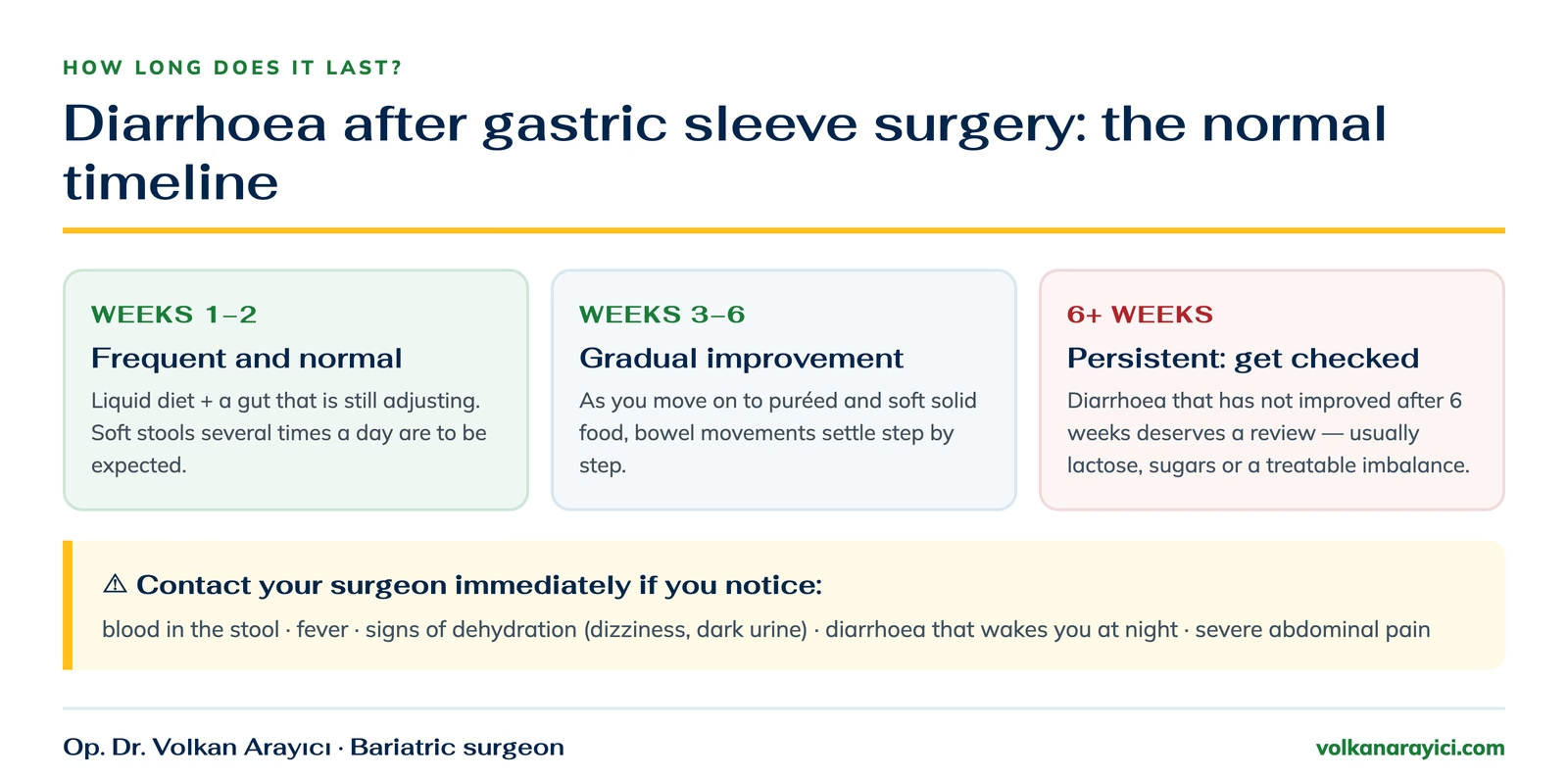
The six-week line: diarrhoea after gastric sleeve surgery that has not clearly improved after six weeks is no longer "just adaptation". It is usually still something simple — lactose, sugars, a medication — but it deserves a review rather than months of quiet suffering. Diarrhoea appearing suddenly one year or more after surgery is a different story: it points away from the operation itself and towards an infection, a food intolerance or another treatable cause.
The practical list
Foods That Trigger Diarrhoea After Gastric Sleeve Surgery — and What to Eat Instead
The fastest way to calm diarrhoea after gastric sleeve surgery is on your plate. Sugary foods and drinks are the number-one trigger, because they set off dumping. Milk and standard dairy come second, thanks to new lactose intolerance. Fried food, coffee, fizzy drinks and "sugar-free" sweeteners such as sorbitol and xylitol complete the usual suspects. Alcohol deserves its own mention: it irritates the healing gut, accelerates dumping and hits far harder after surgery — our guide to alcohol consumption after a gastric sleeve operation explains when and how it can safely return.
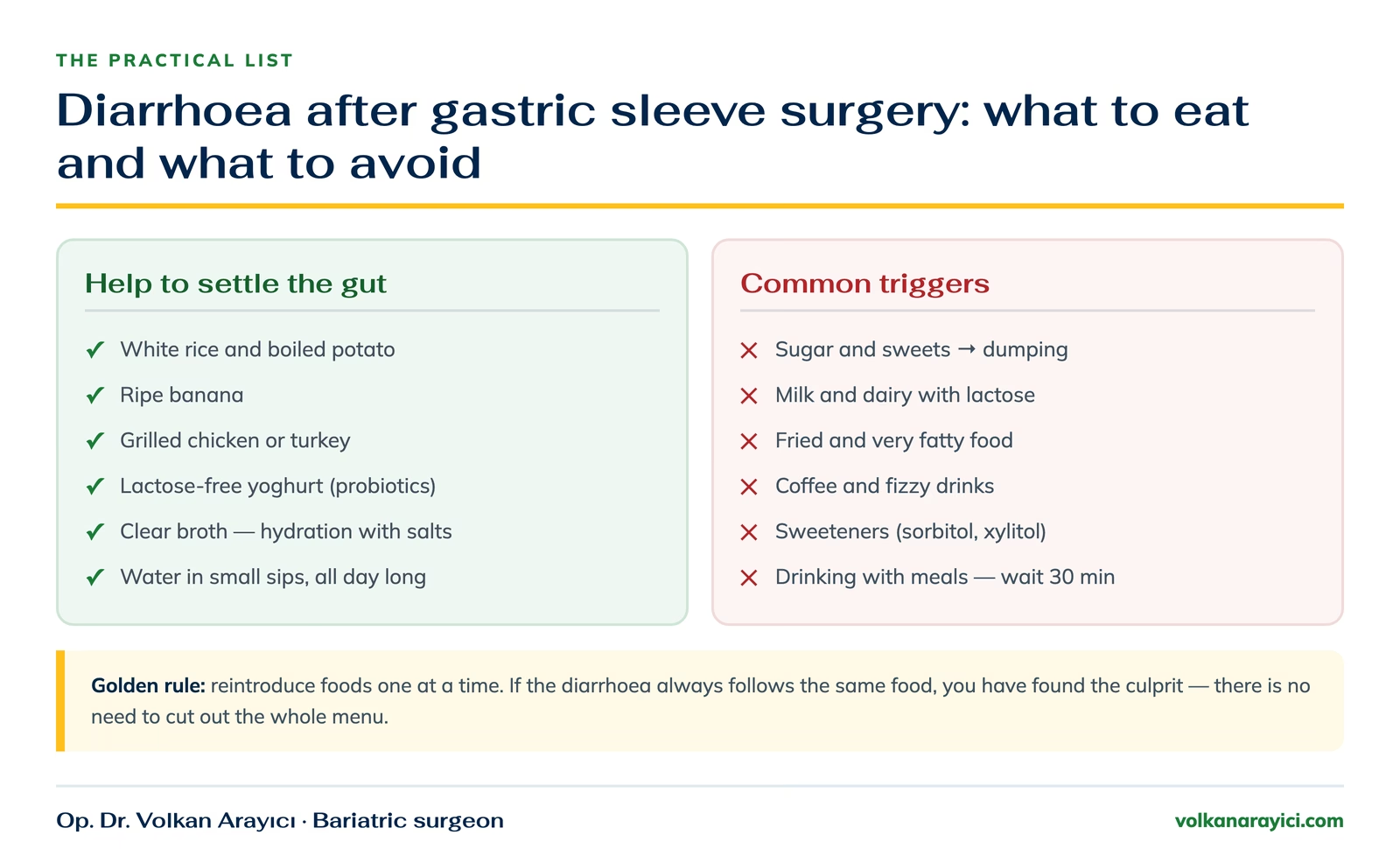
On the helpful side: white rice, boiled potato, ripe banana, grilled chicken or turkey, lactose-free yoghurt and clear broth. Just as important is how you drink: take fluids in small sips all day, and keep a 30-minute gap between eating and drinking — drinking with meals speeds up gastric emptying and makes diarrhoea worse. Diarrhoea also costs you far more fluid than usual, which is dangerous when your water consumption after gastric sleeve surgery is already limited by the smaller stomach — dehydration is the complication we genuinely want to avoid.
Sleeve vs bypass
Diarrhoea After Gastric Bypass vs Gastric Sleeve: What's the Difference?
The two operations affect digestion differently, and the diarrhoea pattern shows it. The sleeve only reduces the stomach's size — food still follows the normal route, so diarrhoea after gastric sleeve surgery is mostly diet-driven and usually temporary. A gastric bypass surgery, on the other hand, reroutes food past part of the small intestine. That makes dumping syndrome more frequent, lets more unabsorbed fat and bile acids reach the colon, and explains why diarrhoea after gastric bypass tends to last longer and needs more careful dietary management.
After the sleeve
Diet-driven · usually settles within 2–6 weeks · dumping possible but less frequent · responds quickly to cutting sugar and lactose.
After the bypass
Malabsorption plays a bigger role · dumping more common · bile-acid diarrhoea and greasy stools possible · more often needs medication alongside diet changes.
Persistent diarrhoea after gastric bypass — especially with pale, greasy stools — should always be reviewed, because it can signal fat malabsorption or a bile-flow issue. If you have noticed a change in stool colour as well, our guide to light-colored stool after gastric bypass explains what the colour changes mean and which ones matter.
Beyond the usual suspects
Persistent Diarrhoea: the Less Frequent Causes Worth Checking
When diarrhoea after gastric sleeve surgery — or diarrhoea after weight loss surgery of any type — drags on despite a clean diet, we widen the search. Three causes come up again and again in long-term follow-up:
Gallbladder and bile acids
Rapid weight loss makes gallstones more likely, and after gallbladder removal a steady trickle of bile can irritate the colon — classic watery, urgent, yellowish diarrhoea. Bile-acid binders treat it very effectively.
Medications
Stomach-acid reducers (omeprazole and similar), a recent course of antibiotics, metformin and magnesium supplements are all common, overlooked triggers. Always review the medicine list before blaming the operation.
Bacterial overgrowth (SIBO)
Changed anatomy and slower transit can let bacteria overgrow in the small intestine — bloating, gas and diarrhoea that improve dramatically with targeted antibiotic treatment.
These are exactly the situations our 12-month aftercare exists for: a short video call, a look at your food and medication diary, and if needed a stool test or breath test — most cases are solved without any procedure. Occasional loose stools are also listed among the manageable disadvantages of gastric sleeve surgery — worth reading if you are still weighing up the operation.
Action plan
How to Treat Diarrhoea After Gastric Sleeve Surgery — and When to See a Doctor
Hydrate first
Small sips of water, clear broth or oral rehydration solution throughout the day. Dark urine and dizziness mean you are already behind.
Strip the diet back
Remove sugar, lactose, fried food, coffee and sweeteners for a few days, then reintroduce foods one at a time. If the diarrhoea always follows the same food, you have found the culprit.
Add probiotics
A lactose-free probiotic yoghurt or a probiotic supplement helps rebuild disrupted gut flora — a simple step with a real effect after bariatric surgery.
Escalate to your surgeon
If six weeks of good habits have not fixed your diarrhoea after gastric sleeve surgery, stop experimenting and get reviewed. Chronic diarrhoea silently drains fluids, vitamins and minerals — exactly what a bariatric patient cannot afford.
Red flags: contact us the same day about diarrhoea after weight loss surgery
Blood in the stool, or black, tar-like stools
Fever above 38 °C together with diarrhoea
Signs of dehydration: dizziness, dark urine, dry mouth
Diarrhoea that wakes you from sleep at night
Severe or worsening abdominal pain
Ongoing weight loss faster than your surgeon expects
One more pattern deserves a mention because it surprises patients: many people swing between diarrhoea and its opposite. If your problem is the reverse one, our guide to constipation after gastric sleeve surgery covers that side in the same practical way.
Who is answering
Follow-Up That Doesn't End at Discharge
This guide was written by Op. Dr. Volkan Arayıcı, IFSO-member bariatric surgeon with more than 5,000 operations, performed at a JCI- and TEMOS-accredited hospital in İzmir. Every patient stays in hospital until discharge — no hotel transfer — and is then followed for 12 months by video call and WhatsApp, which is exactly where questions like "is this diarrhoea normal?" get answered within hours, not weeks. Digestive side effects are among the most common topics in weight loss surgery in Turkey aftercare, and managing them well is part of the operation's success. You can read more about his approach on the about Dr. Volkan Arayıcı page.
Diarrhoea after gastric sleeve that worries you? Send a message — you'll get an answer from the surgeon himself.
WhatsApp: +90 532 466 67 67FAQ
Diarrhoea After Gastric Sleeve — Frequently Asked Questions
Is it normal to have diarrhoea after gastric sleeve surgery?
Yes. In the first two to six weeks, loose and frequent stools are a normal part of adaptation — the liquid diet, the faster-emptying stomach and shifting gut bacteria all contribute. It should improve week by week; diarrhoea that persists beyond six weeks deserves a review.
How long does diarrhoea after sleeve gastrectomy last?
Typically it is most noticeable in weeks 1–2, improves through weeks 3–6 as solid food returns, and settles into a stable rhythm by the second month. Many patients then actually have fewer bowel movements than before surgery.
What foods should I avoid if I have diarrhoea after gastric sleeve surgery?
Sugar and sweets (they trigger dumping), milk and dairy containing lactose, fried and very fatty food, coffee, fizzy drinks and sweeteners such as sorbitol or xylitol. Also avoid drinking with meals — keep a 30-minute gap.
What role do probiotics play in treating it?
Surgery, antibiotics and the new diet disrupt gut flora. A daily lactose-free probiotic yoghurt or a probiotic supplement helps rebuild it and is one of the simplest effective steps against diarrhoea after gastric sleeve surgery.
Why is hydration so important with diarrhoea after a sleeve gastrectomy?
Because you lose fluid faster than your smaller stomach lets you replace it. Dehydration — dizziness, dark urine, dry mouth — is the main genuine danger of post-sleeve diarrhoea. Sip water, broth or rehydration solution continuously through the day.
Which infection should be considered if diarrhoea won't stop?
After any hospital stay and antibiotics, Clostridioides difficile (C. difficile) should be ruled out with a stool test if diarrhoea is persistent, watery or accompanied by fever. Standard traveller's-diarrhoea bugs and small-intestinal bacterial overgrowth (SIBO) are the other treatable suspects.
Is diarrhoea after gastric bypass different from the sleeve?
Yes. The bypass reroutes food past part of the intestine, so malabsorption, dumping and bile-acid diarrhoea are more common and can be longer-lasting. Diarrhoea after gastric sleeve surgery is mostly diet-driven and temporary.
When should I see a doctor about diarrhoea after weight loss surgery?
Immediately if there is blood in the stool, fever, signs of dehydration, night-time diarrhoea or severe abdominal pain. Otherwise, book a review if diarrhoea has not clearly improved after six weeks of dietary care.
Op. Dr. Volkan Arayıcı
Specialist in Bariatric & Metabolic Surgery · Izmir, Turkey
This article was written and medically reviewed by Op. Dr. Volkan Arayıcı. Dr. Arayıcı has been exclusively specialising in bariatric surgery since 2014 and has performed over 5,000 procedures at a JCI- and TEMOS-accredited hospital in Izmir.
✍ Published: September 18, 2025 · 🔄 Updated: September 3, 2026 · About the author →
